Create Caring Community.
The Restorative Practices (RP) program in the Stamp provides opportunities for students to discover impactful leadership skills and develop meaningful relationships with their community and the world around them. Through restorative service days, trainings on leadership and community-building skills, and conflict resolution consultations, we help students connect more intentionally with their peers, teams, and student organizations.
What are Restorative Practices?
Restorative practices are a set of values, traditions, and practices shared by indigenous groups and spiritual communities across the world. Some of the central philosophies of restorative practices are that every individual matters and contributes to the community, locally and globally. Restorative practices center accountability and ask us to reflect on how our individual actions affect the people around us and the world we live in.
Get Involved
Join us for a Restorative Service Day
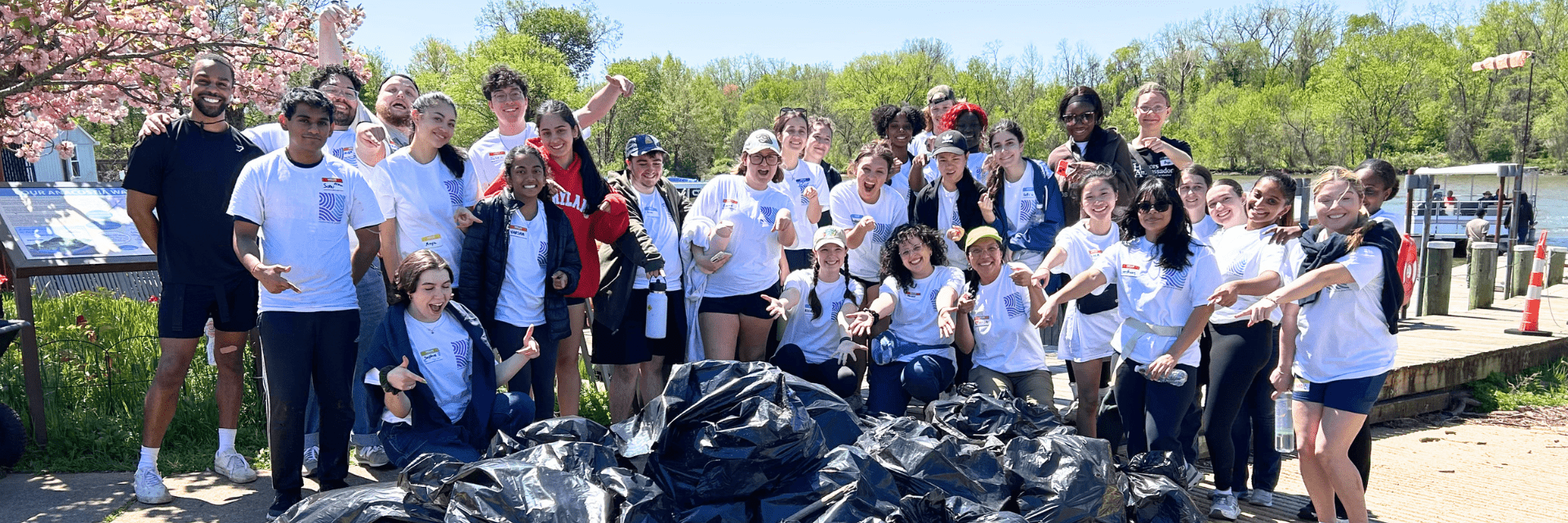
Through restorative service days, participants spend a day in the outdoors giving back to the environment and our local community through service, as well as making new connections with their peers. Past service days have included kayaking on the Anacostia River to remove trash and debris from our local waterway. Following the service, we host restorative community-building conversations to reflect on the experience.
- Why participate:
- Learn more about the values of restorative practices, and how we can put those values into action as a community
- Form new connections with other students or bring a group of friends to strengthen your current friendships!
- Learn more about your local environment and how we can give back to the world we live in
- Free lunch and a program t-shirt are provided!
- How to participate
- Join fellow students and staff on Saturday, October 3rd from 9:45 AM to 3 PM for a thoughtful, reflective day on campus identifying and removing invasive plant species. Please RSVP by Monday, September 21, 2026 at this link!
Stay tuned here and on LCSL's Instagram @umd.lcsl for more news on leadership events and opportunities!
Conflict is a normal part of any individual relationship or team! Request a consultation with our Restorative Practices coordinator to share about the conflict you are facing and learn more on how you could resolve it in a restorative way. Please contact lcsl@umd.edu to inquire about how to begin a Conflict Resolution Consultation.
Request a Restorative Leadership Program
10 Ways to Lead Restoratively
This training shares 10 ways to be a restorative leader through mindfulness practices and approaches to interpersonal relationships. Participants will learn how to create a restorative community in their teams and to lead from empathetic, reflective values. This training is a great opportunity for students, student organization leaders, and more to build new skills.
- Goals and Benefits
- Participants will be introduced to restorative philosophies, values, and leadership skills to build restorative community with their teams and the people around them.
- Through this training, participants will craft mindfulness intentions to practice living more restoratively in their everyday lives, teams, and workplaces.
- Program Time Required
- 1 to 1.5 hours
Restorative Practices 101
Restorative Practices, utilized by communities around the world, are a set of values and ways of connecting with each other and our environment. This training provides a brief overview of restorative philosophies, values, and practices and how they are used at UMD.
- Goals and Benefits
- Through this training, participants will learn an overview of restorative justice and its values, philosophy, history, and practices
- Attendees will gain insight into how restorative practices are being implemented at the University of Maryland and how we can implement them into our daily lives
- Program Time Required
- 45 mins to 1 hour
Community-Building Circle
Through this session, participants can engage in a tailored community-building conversation to learn more about each other and connect intentionally with their community members.
- Goals and Benefits
- Through this session, participants will learn about the features of a community building circle and engage in a restorative circle conversation.
- By the end of this session, participants will build deeper relationships and strengthen their sense of community by sharing and listening to understand one another.
- Program Time Required
- 1 to 1.5 hours
Learn More about Restorative Practices at UMD
Connect with Us
- Location: 1110 Stamp Student Union
- Office Hours: Monday through Friday, 9 a.m. to 5 p.m.
- Phone: 301-314-9044
- Email: lcsl@umd.edu
- Follow us on Instagram
- Learn about our staff